


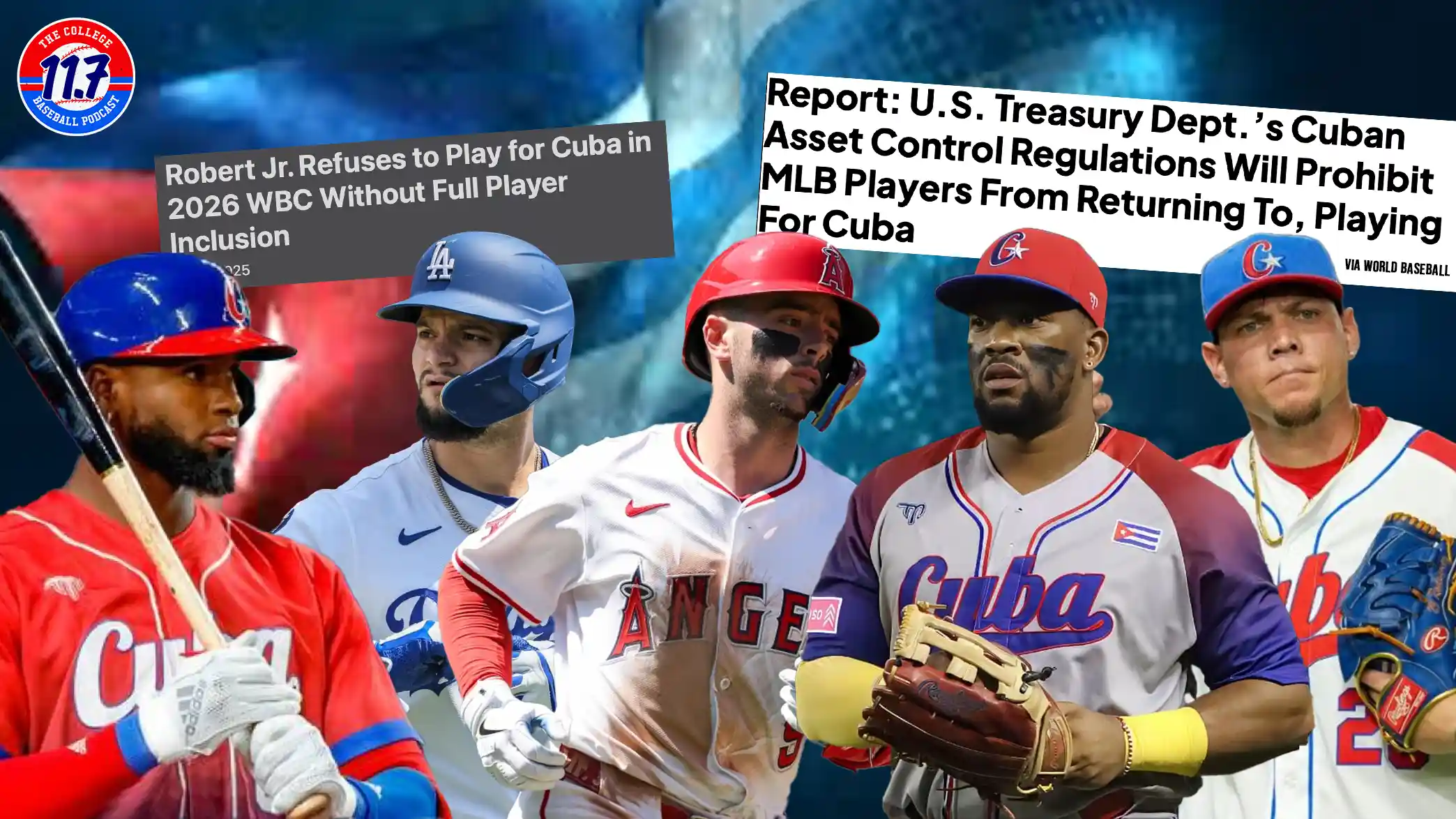
Cuba’s run to the semifinals at the 2023 World Baseball Classic felt like a breakthrough. For the first time in years, the roster reflected the reality of Cuban baseball in the modern era—professional players from abroad, real pitching depth, and enough star power to survive the WBC format.
Three years later, that window is closing.
As the 2026 World Baseball Classic approaches, Cuba is set to miss too much elite, game-changing talent to realistically expect another semifinal appearance. Not because the talent doesn’t exist—but because it won’t be allowed, available, or willing to participate.
This is not about optics. It’s about outcomes.
The WBC is not a marathon. It’s a sprint decided by:
Japan has Shohei Ohtani.
The U.S. and Dominican Republic roll out MVPs and All-Stars.
Cuba, meanwhile, enters 2026 with depth but a shrinking ceiling, largely due to the continued exclusion—or alienation—of elite players.
Pages is one of the most talented Cuban players on the planet and already an impact Major Leaguer. He has publicly stepped away from WBC consideration, citing the Cuban federation’s refusal to fully include Cuban-Americans and defected players.
Why it matters: Pages is exactly the type of player Cuba lacks without him—middle-order power, premium athleticism, and postseason-level defense. There is no internal replacement.
Neto didn’t decline. He was blocked.
As a Cuban-American, Neto’s availability tested whether the federation’s talk of inclusion extended beyond rhetoric. It didn’t. The decision to exclude Cuban-Americans directly factored into Pages’ decision to step away as well.
Why it matters: Shortstop is the thinnest and most critical position on Cuba’s roster. Neto would instantly be the best two-way option up the middle. Instead, Cuba voluntarily weakens itself.
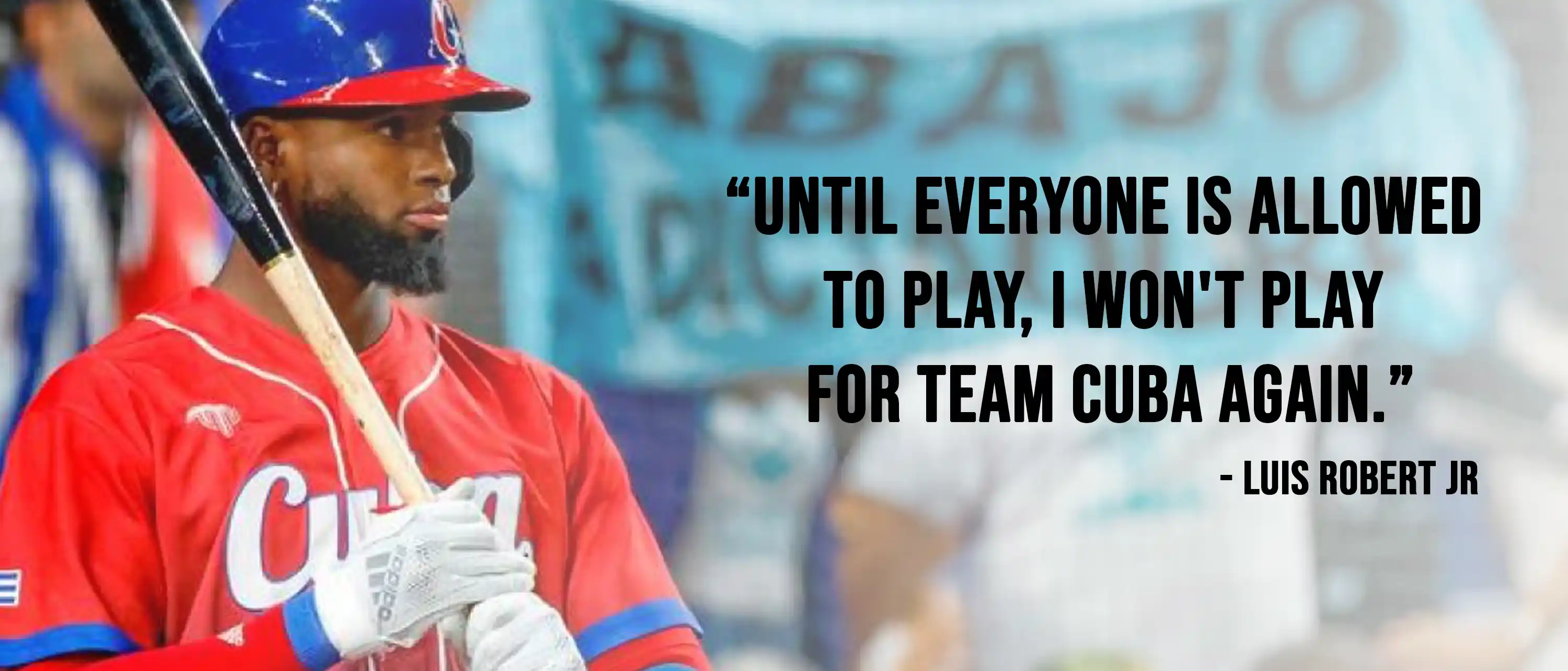
The biggest star of the 2023 roster has made his stance clear: he will not return until all Cuban players are welcomed equally, regardless of how or when they left the island.
Why it matters: Robert is Cuba’s only true MVP-caliber position player. Losing him removes the lineup’s fear factor and the outfield’s defensive anchor.
Drake is currently unavailable following a failed drug test at the Premier12 tournament. While he is appealing, the reality is that he is out of the picture for now as his original 1-year suspension was extended to 2 years.
Why it matters: Drake isn’t just depth—he’s one of the more premier power bats Cuba can realistically roster. In a lineup already stretched thin, his absence compounds the problem.
Rodríguez was the engine of Cuba’s 2023 pitching staff and parlayed that performance into a $30+ million MLB contract. Historically, players who left delegations faced long-term exile, and Yariel’s status has lived in that gray area.
Recent reporting suggests the federation may be open to welcoming him back—but nothing is settled. Even if he returns, his role will be dictated by MLB usage patterns rather than tournament needs.
Why it matters: Cuba leaned heavily on having a true top-end arm in 2023. Entering 2026 without clarity here is a massive risk.
Not to even mention Aroldis Chapman, who rejected the Cuban team's invitation after deciding to 'allow' exiles to participate. Chapman will be playing with Great Britain.
UPDATE 1/22: Yariel Rodriguez has received permission from the Blue Jays but will be limited to maximum 2 innings per outing.
There is good news.
Cuba’s pitching depth is better than ever, headlined by:
That opener-to-closer formula can steal games.
But it doesn’t carry you through the semifinal gauntlet without bats and elite defenders behind it.
Individually, each absence can be explained.
Collectively, they tell the same story.
Cuba is voluntarily shrinking its talent pool during the most talent-rich era in Cuban baseball history. The federation continues to choose control over competitiveness, and the cost shows up on the roster.
Depth keeps you respectable.
Stars take you deep.
Cuba will still field a competitive team. It will still beat lesser opponents. A quarterfinal appearance is absolutely realistic.
But expecting another semifinal run—without Andy Pages, Zach Neto, Luis Robert Jr., Yadir Drake, and with Yariel Rodríguez uncertain—means pretending the margin for error hasn’t changed.
It has.
Unless federation policy evolves quickly and meaningfully, 2023 will be remembered not as the start of a resurgence—but as the last moment when Cuba’s talent, timing, and access briefly aligned.

Cuba’s run to the semifinals at the 2023 World Baseball Classic felt like a breakthrough. For the first time in years, the roster reflected the reality of Cuban baseball in the modern era—professional players from abroad, real pitching depth, and enough star power to survive the WBC format.
Three years later, that window is closing.
As the 2026 World Baseball Classic approaches, Cuba is set to miss too much elite, game-changing talent to realistically expect another semifinal appearance. Not because the talent doesn’t exist—but because it won’t be allowed, available, or willing to participate.
This is not about optics. It’s about outcomes.
The WBC is not a marathon. It’s a sprint decided by:
Japan has Shohei Ohtani.
The U.S. and Dominican Republic roll out MVPs and All-Stars.
Cuba, meanwhile, enters 2026 with depth but a shrinking ceiling, largely due to the continued exclusion—or alienation—of elite players.
Pages is one of the most talented Cuban players on the planet and already an impact Major Leaguer. He has publicly stepped away from WBC consideration, citing the Cuban federation’s refusal to fully include Cuban-Americans and defected players.
Why it matters: Pages is exactly the type of player Cuba lacks without him—middle-order power, premium athleticism, and postseason-level defense. There is no internal replacement.
Neto didn’t decline. He was blocked.
As a Cuban-American, Neto’s availability tested whether the federation’s talk of inclusion extended beyond rhetoric. It didn’t. The decision to exclude Cuban-Americans directly factored into Pages’ decision to step away as well.
Why it matters: Shortstop is the thinnest and most critical position on Cuba’s roster. Neto would instantly be the best two-way option up the middle. Instead, Cuba voluntarily weakens itself.
The biggest star of the 2023 roster has made his stance clear: he will not return until all Cuban players are welcomed equally, regardless of how or when they left the island.
Why it matters: Robert is Cuba’s only true MVP-caliber position player. Losing him removes the lineup’s fear factor and the outfield’s defensive anchor.
Drake is currently unavailable following a failed drug test at the Premier12 tournament. While he is appealing, the reality is that he is out of the picture for now as his original 1-year suspension was extended to 2 years.
Why it matters: Drake isn’t just depth—he’s one of the more premier power bats Cuba can realistically roster. In a lineup already stretched thin, his absence compounds the problem.
Rodríguez was the engine of Cuba’s 2023 pitching staff and parlayed that performance into a $30+ million MLB contract. Historically, players who left delegations faced long-term exile, and Yariel’s status has lived in that gray area.
Recent reporting suggests the federation may be open to welcoming him back—but nothing is settled. Even if he returns, his role will be dictated by MLB usage patterns rather than tournament needs.
Why it matters: Cuba leaned heavily on having a true top-end arm in 2023. Entering 2026 without clarity here is a massive risk.
Not to even mention Aroldis Chapman, who rejected the Cuban team's invitation after deciding to 'allow' exiles to participate. Chapman will be playing with Great Britain.
UPDATE 1/22: Yariel Rodriguez has received permission from the Blue Jays but will be limited to maximum 2 innings per outing.
There is good news.
Cuba’s pitching depth is better than ever, headlined by:
That opener-to-closer formula can steal games.
But it doesn’t carry you through the semifinal gauntlet without bats and elite defenders behind it.
Individually, each absence can be explained.
Collectively, they tell the same story.
Cuba is voluntarily shrinking its talent pool during the most talent-rich era in Cuban baseball history. The federation continues to choose control over competitiveness, and the cost shows up on the roster.
Depth keeps you respectable.
Stars take you deep.
Cuba will still field a competitive team. It will still beat lesser opponents. A quarterfinal appearance is absolutely realistic.
But expecting another semifinal run—without Andy Pages, Zach Neto, Luis Robert Jr., Yadir Drake, and with Yariel Rodríguez uncertain—means pretending the margin for error hasn’t changed.
It has.
Unless federation policy evolves quickly and meaningfully, 2023 will be remembered not as the start of a resurgence—but as the last moment when Cuba’s talent, timing, and access briefly aligned.


